

Men die.
The grass dies.
Men are grass.
G. Bateson
Abstract
If men die and grass dies, then, by logical similarity, men are grass. This syllogism, which Bateson calls “budding,” inspired the writer to replicate in the laboratory the generative processes underlying natural forms.
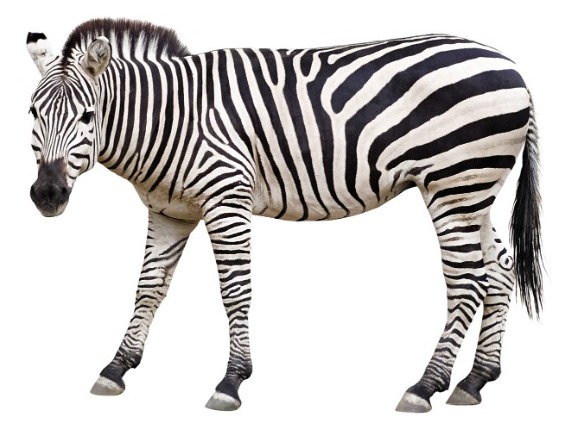
Taking a cue from Alan Turing’s morphogenesis, who in 1952 described the chemical processes responsible for the formation of patterns (such as zebra stripes), experimentation conducted in January 2025 resulted in the digital reproduction and visualization of data related to the growth and decay stages of grass stems in a garden. The generative rules underlying these processes were implemented through Turing’s theory of morphogens, which was used to set up the code and build the digital system.
Thanks to the writing of the software, it was possible to simulate the life cycles of a digital garden and observe emerging patterns, thus deepening the understanding of the dynamics underlying the generation of natural forms.
Bateson and the Theory of Complexity: Men Are Grass
In the context of complexity theory, Gregory Bateson, an American anthropologist and thinker, developed the concept of “budding syllogism,” an idea that weaves nature, life and information into an interconnected dance. With the budding syllogism, whereby “humans” become, according to the rules of Socratic syllogism, “grass,” a powerful insight into our connection with nature and universal evolutionary mechanisms is proposed.
Our existence, evolution and growth are shaped by laws and dynamics similar to those that govern plant growth. Just as grass feeds on light, water and soil to grow, humans also transform themselves through continuous interaction with the environment and the forces around them. Bateson emphasizes that this interaction is crucial and that it can be applied as much to our human context as to our plant context.
Alan Turing’s Morphogenesis
Morphogenesis-the process by which living structures are formed-is a field that relates closely to Bateson’s complex and interconnected vision. Alan Turing, with his 1952 work, described how the laws governing the growth of organisms are analogous to those governing complex systems. These laws are based on the interaction between two basic chemical agents: an activator and an inhibitor.
The form taken by a living being-be it a plant, animal or human-is the result of a process of self-organization. This process follows patterns derived from the chemical interaction of the agents mentioned above. In the context of complexity theory, the information governing these interactions becomes the basis of all reality, in which even minute variations can lead to complex and unpredictable dynamics.
Operation of the Code
The software, written in Processing, is designed to simulate the life cycle of a digital garden using Turing’s laws of morphogenesis as a guide. The mathematical equations underlying the code reproduce the growth and decay processes of grass stems, providing a dynamic representation of a complex biological system.
Key elements of the code:
- Turing morphogenesis equations: Defined to model the interaction between activators and inhibitors in the system.
- Initial parameters: fertilizer in blue (positive factors) and weeds in red (negative factors) are set as dynamic inputs that influence growth processes.
- Graph visualization: rendered through Processing, allows real-time observation of emerging patterns.
Through the implementation of these elements, it was possible to simulate the evolution of the system and analyze how the interactions between the various factors determined the final results. Indeed, the code allows us to explore how complex patterns emerge from simple rules, providing a tool to better understand the dynamics of natural morphogenesis.


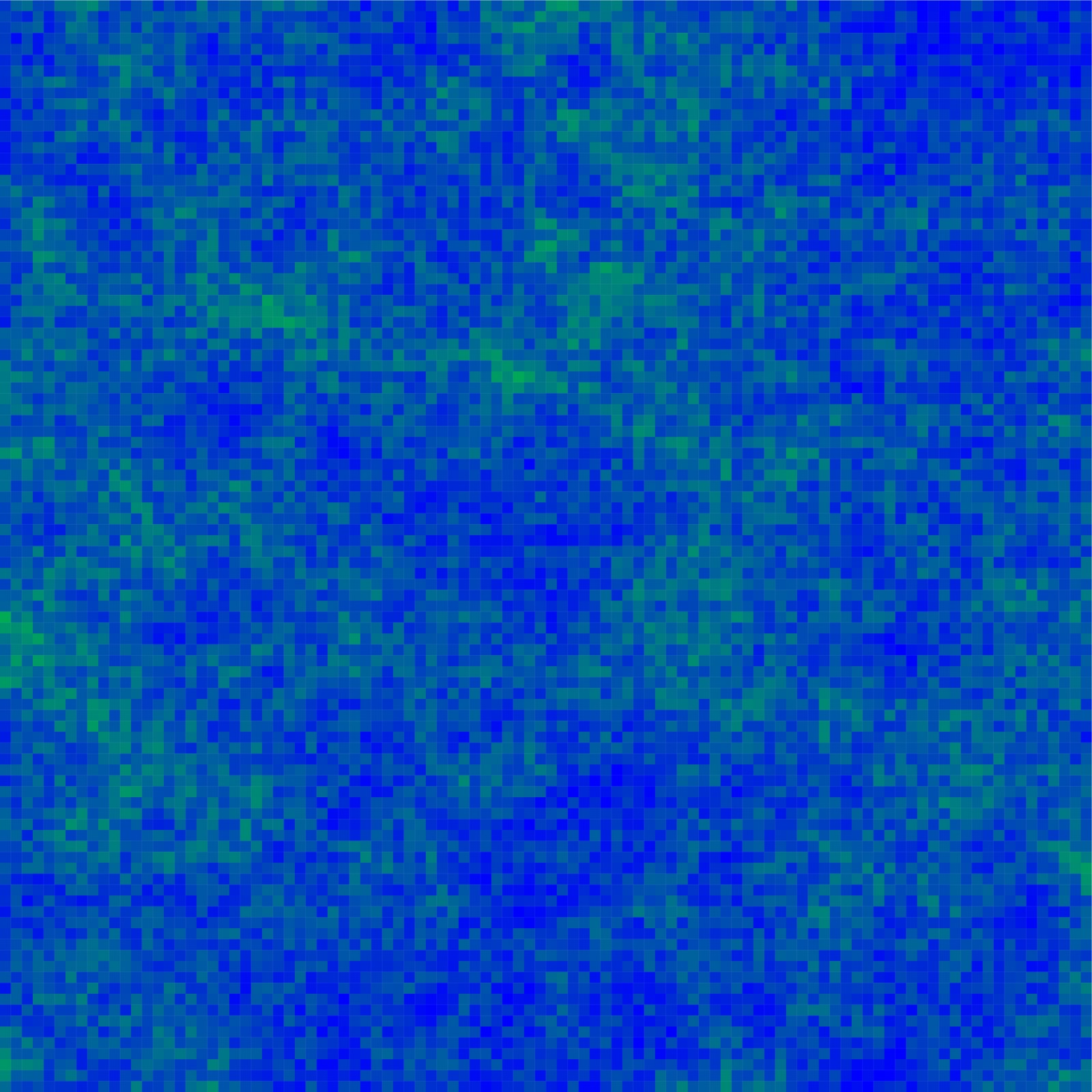
Some patterns derived from the interaction of morphogens. In blue, fertilizer represents the activating agent, from whose presence healthy plants are derived (in green), and in red, weeds, the inhibiting agent. In black is the dry soil.
The Code: a chromatic description
The code produces an animation that via 4 different sliders, is manipulated in order to allow or disallow the plants (in green) to spread.
The 4 parameters are: the spread of the fertilizer (blue), the spread of weedsi (red), the growth rate of healthy plants (green) and the rate of decay, disease (black). The explanation in detail follows, of the part of the code that determines the colors of the program once it is started.
Code extract, detail
if (wValue > fValue) {
        fill(lerpColor(color(0, 0, 0), color(255, 0, 0), wValue)); // Erbacce: dal nero al rosso
      } else {
        fill(lerpColor(color(0, 255, 0), color(0, 0, 255), fValue)); // Fertilizzante: dal verde al blu
      } rect(x * cellWidth, y * cellHeight, cellWidth, cellHeight);
Weeds:
fill(lerpColor(color(0, 0, 0), color(255, 0, 0), wValue)); // Erbacce: dal nero al rosso
Here, the color of the weeds (wValue) is determined by the value of wValue, which varies between 0 and 1:
When wValue is 0, the resulting color will be black (color(0, 0, 0)). When wValue is 1, the resulting color will be red (color(255, 0, 0)). For intermediate values of wValue, the color will be a gradation of black toward red. For example, a value of 0.5 will produce a color that is close to the middle between black and red.
Fertilizer:
fill(lerpColor(color(0, 255, 0), color(0, 0, 255), fValue)); // Fertilizzante: dal verde al blu
Here, the color of the fertilizer (fValue) is determined by the value of fValue, which also varies between 0 and 1:
When fValue is 0, the resulting color will be green (color(0, 255, 0)). When fValue is 1, the resulting color will be blue (color(0, 0, 255)). For intermediate values of fValue, the color will be a gradation of green toward blue. For example, a value of 0.5 will produce a color that approaches the middle between green and blue.
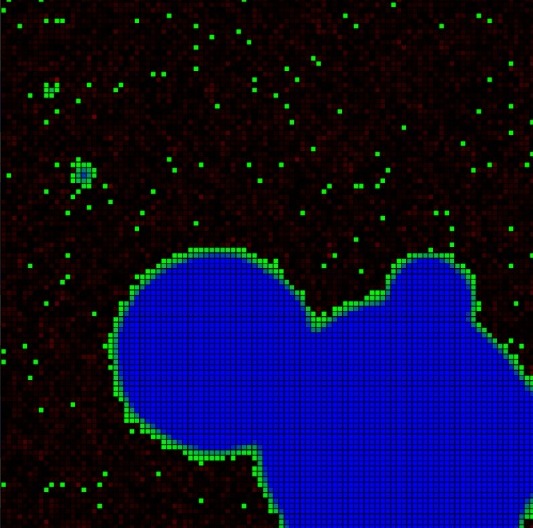
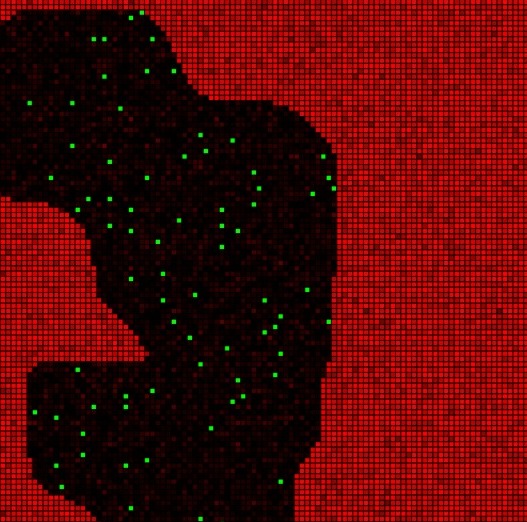
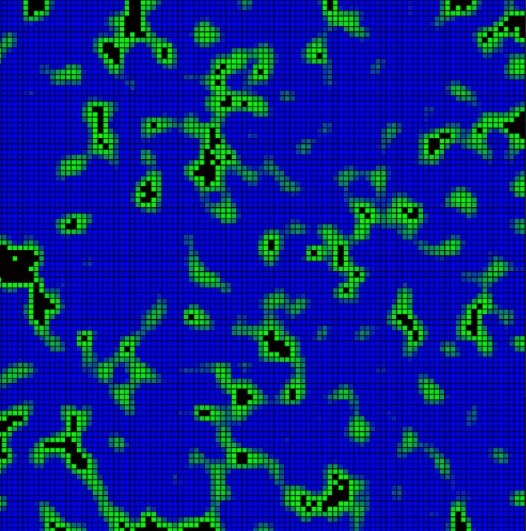
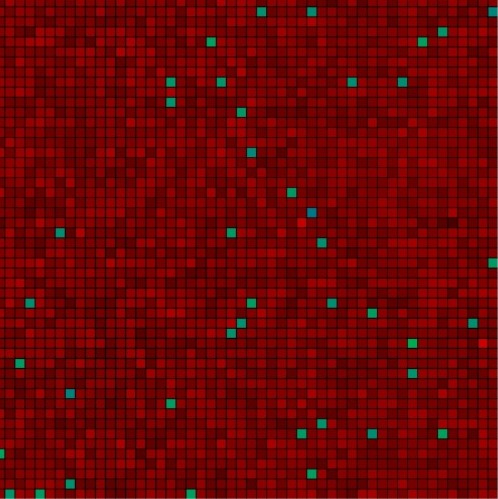
Some patterns derived from the interaction of morphogens. In blue, fertilizer represents the activating agent, from whose presence healthy plants are derived (in green), and in red, weeds, the inhibiting agent. In black is the dry soil.
Color interpretation in relation to simulation
Weeds:
Cells with a high wValue (close to 1) will appear red, indicating abundant weed growth.
Cells with a low wValue (close to 0) will appear black, indicating no weeds.
A transition between black and red suggests the growth dynamics of weeds based on their “spread” (diffusion) and influencing factors.
Fertilizer:
Cells with a high fValue (close to 1) will appear blue, suggesting a high presence of fertilizer.
Cells with a low fValue (close to 0) will appear green, indicating low fertilizer presence.
The gradation between green and blue represents the interaction between fertilizer and plants, with the intensification of fertilizer likely to promote vegetation growth.
The Garden and Human Life: An Interacting Metaphor
The digital garden experiment represents a powerful metaphor for understanding human life as a complex system in which countless variables interact continuously. In this context, garden fertilizer can be symbolically compared to elements such as education, nutrition and positive experiences, while weeds represent disease, stress and destructive habits.
Just as in the digital garden, human life is characterized by a delicate balance between constructive and destructive factors that influence our growth or decay. Understanding these dynamics-made possible by using the laws of morphogenesis-invites us to reflect on our role within larger, interconnected systems.
Bibliography
- Bateson, G. (1972). Steps to an Ecology of Mind. Chandler Publishing Company.
- Turing, A. M. (1952). “The Chemical Basis of Morphogenesis.” Philosophical Transactions of the Royal Society of London. Series B, Biological Sciences. , 237(641), 37-72.
Margin Notes
- 1 Gregory Bateson explores the connections between nature, mind and culture in his book Steps to an Ecology of Mind. Il sillogismo “in erba” rappresenta un esempio del suo approccio sistemico alla comprensione della realtà.
- 2 Alan Turing, in his 1952 paper, laid the theoretical foundation for the study of biological pattern formation, opening up new perspectives in computational biology.
- 3 The implementation of the code allowed the mathematical laws of morphogenesis to be translated into graphical simulations, making the dynamic evolution of the system visible.


